
HOW ELITE TEAMS BUILD EXTREME TRUST(Art. 1/2)
- agmxdirect

- Apr 6
- 3 min read
Updated: Apr 14

Amid the recent conflict between the United States and Iran in the early days of April 2026, a U.S. Air Force F-15E Strike Eagle fighter jet was shot down over Iranian territory. On board were two service members: the pilot and the Weapon Systems Officer (WSO). Both successfully ejected and survived the crash — but immediately entered the most critical condition a combatant can face: isolation behind enemy lines.
What followed became one of the most complex and high-risk rescue operations in the recent history of modern special operations.
Ejection in Hostile Territory
After the aircraft was lost, U.S. forces launched a high-risk operation inside Iran. The mission involved: U.S. Special Operations Forces, Specialized aerial rescue units, Strategic intelligence support, Navy SEAL operators, including SEAL Team Six operators.
The operation mobilized hundreds of personnel and dozens of aircraft, coordinated across multiple domains — air, ground, electronic, and informational. The first crew member was located and rescued just hours after the shootdown. The second case, however, would become emblematic.
The Pilot in the Zagros Mountains
The second airman remained behind enemy lines for nearly 48 hours, concealed within the central Zagros Mountains, southwest of Isfahan Province, near the mountainous region of Kohgiluyeh and Boyer-Ahmad.
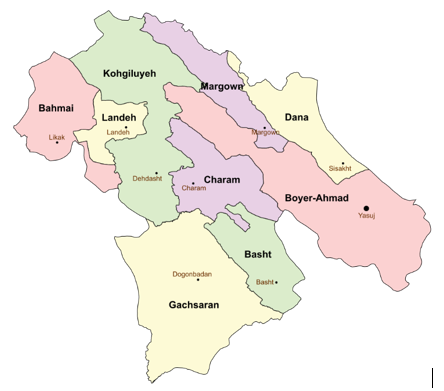
At approximately 6,500 feet (about 2,000 meters) above sea level, he maneuvered toward a rocky ridgeline, reaching nearly 7,000 feet (~2,100 m). There, he found shelter inside a natural rock crevice, remaining hidden for between 36 and 48 hours.
The region’s terrain — parallel ridges, deep valleys, and natural caves — favored his survival. In this extreme environment, he successfully evaded Iranian search forces while maintaining strict survival discipline and minimal communications. He was ultimately extracted during a highly coordinated nighttime operation later described by military analysts as one of the most difficult rescue missions ever conducted in a contemporary hostile environment.
What Is a CSAR Operation?
The mission fell into the category known as CSAR — Combat Search and Rescue.
It is among the most complex operations in modern warfare because it requires the simultaneous integration of strategic intelligence, precision aviation, special operations forces, combat medicine, and electronic warfare — all conducted inside active enemy territory.
Typical equipment employed includes MH-60 or MH-47 helicopters, night-vision systems, thermal sensors, defensive side-mounted weaponry, advanced medical kits, and missile-defense countermeasure systems. A CSAR mission unfolds through multiple coordinated phases:
1. Isolation (ISOPREP)
The isolated service member activates survival procedures: encrypted radio, emergency beacon, and authentication codes.
2. Location
Satellites, drones, and electronic intelligence search for minimal signals. Identity confirmation is mandatory before any approach to avoid ambush.
3. Tactical Planning
A joint rescue force is rapidly assembled: rescue helicopters, armed escort aircraft, electronic warfare assets, and special operators.
4. Infiltration
Aircraft enter hostile territory using nap-of-the-earth flight profiles, usually at night, under radio silence and along unpredictable routes.
5. Contact and Security (SEAL Phase)
Operators deploy first, establish a defensive perimeter, secure the survivor, and assess physical condition — the most dangerous phase of the mission.
6. Extraction
Recovery occurs via rapid landing or aerial hoist. Ground time typically ranges from 30 seconds to three minutes.
7. Exfiltration
Immediate withdrawal under air cover, electronic countermeasures, and protection from attack aircraft.
Far Beyond Technology: Trust
If someone dared to ask the Navy SEALs’ “HR department” — assuming such a thing truly exists:
“How do you choose who becomes a SEAL?”
The answer would likely surprise most people.
It does not begin with performance. Nor physical strength. Not even technical skill.
The real criterion lies in something deeper: extreme trust.
A level of trust capable of sustaining the motto that guides every mission: “We do not leave our people behind.”
In the next article, we will explore exactly that:
HOW ELITE TEAMS BUILD EXTREME TRUST — and what organizations can learn from them.
(To be continued — Article 2 of 2)

by Asfene G. Macciantelli
The Author of EXTREME TEAMNESS — The Culture of Magnanimous Cohesion


Comments